Deer season driving safety and what to do after a collision
Lee Reed Insurance | Oct 21 2026 13:00
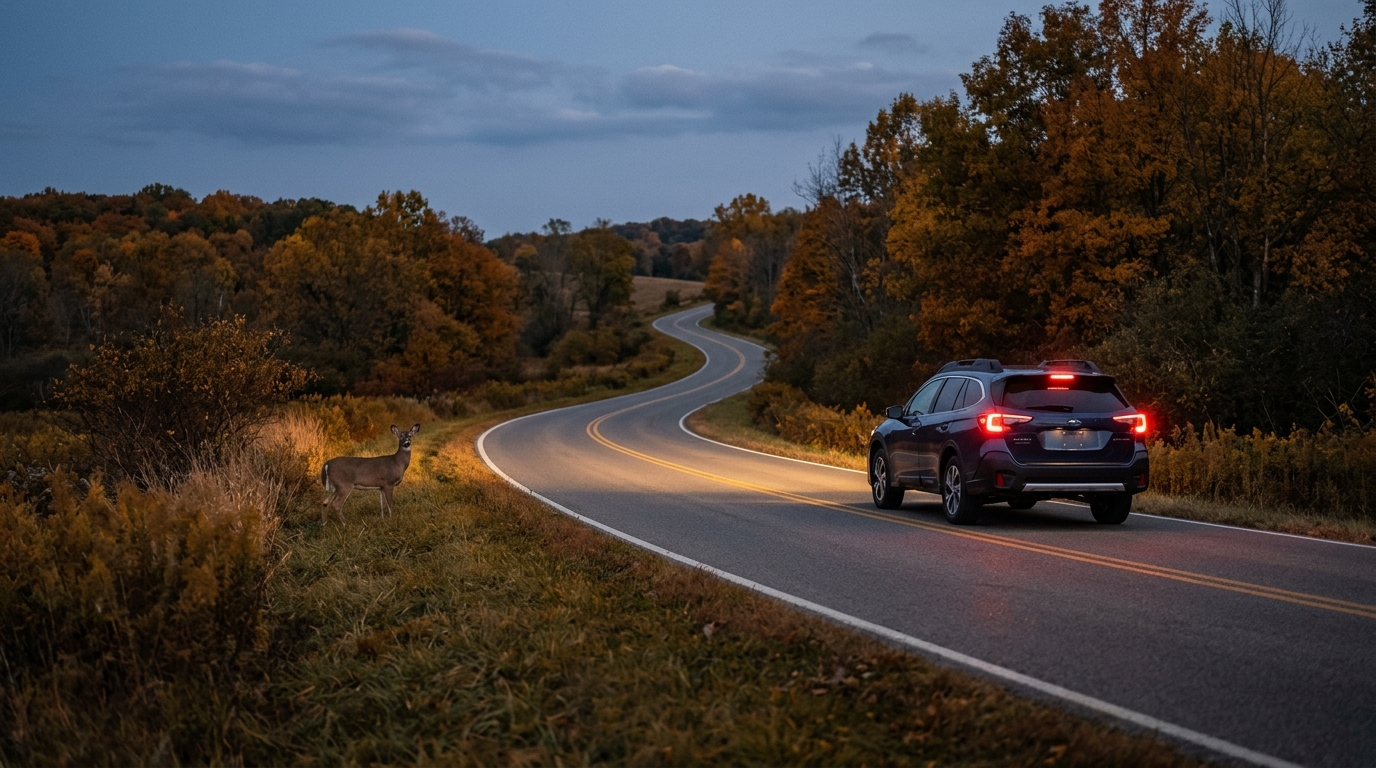
Deer collisions become more common in fall because deer are more active during mating season and spend more time moving between feeding and bedding areas. The safest response is prevention: slow down when conditions call for it, scan well beyond your headlights, and stay in control if a deer suddenly enters the road. If a collision happens, protect people first, document what you can safely document, and report the loss promptly.
For personal auto clients, this is also a useful reminder that vehicle damage from striking a deer is generally handled differently from a crash involving another vehicle. Lee Reed Insurance can help you understand how your individual policy and deductible may apply.
Why Deer Collisions Increase in Fall
In fall, deer are especially mobile. Breeding activity, changing food sources, harvesting activity, and shifting daylight patterns can all place more deer near roadways. A deer that appears at the edge of the road may not stay there, and one deer often means others are nearby.
Rural roads, wooded corridors, fields, creek beds, and neighborhoods bordering undeveloped land can all create frequent deer crossings. However, deer can appear on suburban streets and busy routes as well. A familiar commute is not necessarily a low-risk one.
When Drivers Should Be Most Alert
Deer are often most active around dawn and dusk, when visibility is changing and many people are commuting. Remain especially watchful from the hour before sunset through the hours after dark, as well as in the early morning before and after sunrise.
Rain, fog, glare, and wet leaves can make it harder to see an animal or stop safely. Slow down on roads marked for deer crossings, particularly where shoulders are narrow or sightlines are limited by trees, hills, or curves. Reduce distractions, keep both hands available for steering, and scan the road edges rather than focusing only on the lane directly ahead.
Brake Firmly and Stay in Your Lane
If a deer enters your path, your natural reaction may be to swerve. In many situations, though, swerving creates a greater risk of a head-on collision, rollover, collision with another vehicle, or impact with a tree, guardrail, or ditch.
When it is safe to do so, brake firmly while keeping your vehicle pointed straight and in your lane. If your vehicle has antilock brakes, press the brake pedal firmly and allow the system to work; avoid pumping the brakes. Keep your hands on the wheel, look where you want the vehicle to go, and avoid abrupt steering movements.
For example, if a deer steps into the road on a two-lane highway, controlled braking may result in an unavoidable impact. Attempting to steer into oncoming traffic or off the road can turn one dangerous event into a far more serious crash. Safety for you, your passengers, and other motorists comes first.
Use High Beams Thoughtfully
On dark roads with no nearby traffic, high beams can give you more time to spot movement along the shoulder. Dim them promptly for approaching or leading vehicles. If you see a deer, slow down and expect more animals to follow. Deer commonly travel in groups, and a second or third animal may cross moments after the first.
Do not rely on a horn or flashing headlights to make a deer move predictably. Deer can freeze, turn suddenly, or run in an unexpected direction. Controlled speed and attentive driving are more dependable defenses.
What to Do Immediately After a Deer Collision
After an impact, take a breath and assess whether anyone is injured. If there are injuries, a fire risk, blocked traffic, or another immediate hazard, call 911. Turn on your hazard lights and, if your vehicle can be safely moved, pull it out of traffic to a secure location.
Do not approach, touch, or attempt to move an injured deer. A frightened animal can act unpredictably, and a deer that appears still may suddenly move. Keep passengers away from the animal and wait for law enforcement or animal-control guidance if necessary.
Before driving away, check for obvious safety concerns such as a damaged windshield, leaking fluid, a loose bumper, impaired headlights, a deployed airbag, or a tire issue. If the vehicle is not safe to operate, arrange for a tow rather than taking chances on the road.
Document the Scene Safely
Once you and your passengers are safe, use your phone to make a clear record of what happened. Photographs and notes can help support an accurate insurance claim and make it easier to remember details later.
- Photograph the vehicle from several angles, including close-ups and wider images showing the location of damage.
- Take pictures of the roadway, nearby signs, road conditions, debris, and the surrounding area when it is safe to do so.
- Note the date, time, location, weather, direction of travel, and a brief description of how the collision occurred.
- Save any police report number, tow information, and receipts for reasonable emergency expenses.
- Do not make permanent repairs or dispose of damaged parts before speaking with your insurer, unless doing so is necessary to prevent additional damage or address an immediate safety concern.
Lee Reed Insurance encourages clients to keep insurance identification and emergency contact information readily accessible. Detailed records can make the reporting process more straightforward after a stressful event.
When to Contact Law Enforcement
Contact law enforcement whenever someone is injured, the collision has created a traffic hazard, your vehicle cannot be driven safely, or local or state law requires a report. Calling is also wise when the animal remains in or near traffic, when the crash involves another vehicle or property, or when you need assistance securing the scene.
Reporting requirements can vary by location and by the amount of damage. If you are unsure whether a report is required, contact local law enforcement or the appropriate nonemergency number for guidance. An official report may also be helpful when you file a claim.
How Comprehensive Coverage May Respond
Damage caused by striking a deer is typically considered an “other-than-collision” loss and may be covered under the comprehensive portion of an auto policy, subject to the policy’s terms, limits, exclusions, and deductible. Comprehensive coverage can help with damage to your vehicle from events that are not a collision with another vehicle, such as animal strikes, theft, fire, vandalism, or certain weather-related losses.
Coverage is not automatic simply because an accident involved a deer. Your policy must include comprehensive coverage, and the deductible you selected generally applies. The details matter: the vehicle, repair estimate, rental coverage, towing benefits, and state-specific rules can all affect the claim experience.
It is important to distinguish this from damage caused by swerving. If a driver misses a deer but then strikes a guardrail, tree, or another vehicle, the loss may be treated under collision coverage instead. The precise facts and policy language determine how a claim is evaluated, so report the incident accurately and let the insurer review it.
Prepare Before You Need to File a Claim
A few simple preparations can make an unexpected roadside event easier to manage. Keep your phone charged when possible, store your insurer’s claim contact information in your phone, and carry a basic roadside kit with a flashlight, reflective vest, first-aid supplies, and a way to document the scene. Regular tire, brake, and headlight maintenance also supports safer stopping and visibility.
Fall driving requires extra attention, but it does not have to feel overwhelming. By anticipating deer activity, avoiding dangerous swerves, and knowing what steps to take after an impact, you can make calmer decisions when they matter most.
FAQ
Does comprehensive insurance cover hitting a deer?
In many policies, damage from striking a deer is covered under comprehensive coverage, subject to the policy terms and your deductible. Lee Reed Insurance can review your policy to confirm what coverage you carry and how it may apply.
Should I swerve to avoid a deer?
Generally, it is safer to brake firmly and keep the vehicle under control in your lane than to make a sudden evasive maneuver. Swerving can lead to more severe impacts with traffic, fixed objects, or roadside hazards.
Do I need to call the police after hitting a deer?
Call law enforcement if there are injuries, substantial damage, a road hazard, an undriveable vehicle, or a reporting requirement where the crash occurred. When in doubt, contact the local nonemergency number for direction.
What information should I collect after a deer strike?
Record the time, location, weather, direction of travel, and details of the incident. Photograph the vehicle damage and scene if it is safe, and keep copies of any police, towing, or repair documentation.
What if I avoided the deer but hit something else?
The coverage treatment can differ because the damage resulted from impact with another object or vehicle. Report exactly what happened, and the insurance carrier can evaluate the claim under the applicable policy provisions.
If you would like a straightforward review of your auto insurance, Lee Reed Insurance is here to help. We can walk through your comprehensive and collision coverage, deductibles, and available options so you can feel more confident before the next drive.